


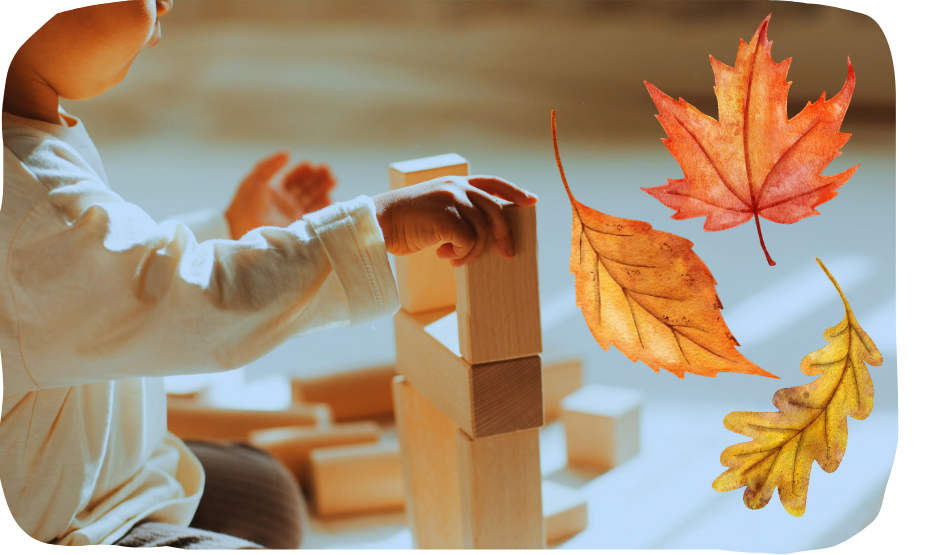
A child balances a small pumpkin on top of a wooden block. It rolls off. They try again, this time placing two blocks side by side. Nearby, another child gathers fallen leaves into a basket, carefully carrying them to their pretend farmers market where each leaf represents a different fruit, vegetable or anything else for them to buy.
To an adult, these moments might look mundane. But for a child, there is so much happening: they are building an idea, formulating a question, conducting an experiment, making a discovery.
October offers wonderful invitations to play. Pumpkins, seedpods, leaves, and sticks bring new textures, shapes, and possibilities into children’s familiar worlds. Paired with everyday materials—blocks, baskets, fabric, or an empty box—these seasonal treasures can become almost anything a child can imagine.
Everyday Materials, New Discoveries
A block is rarely just a block in a child’s hands. It might become a tractor carrying pumpkins, a bridge across a meandering creek, or the walls of a home for woodland animals. A torn piece of fabric becomes a roof, and a handful of leaves becomes a garden.
As children build, they explore questions through their actions: Will this roof stay up? What happens if I add one block more? How can I make room for more woodland animals?
They encounter early math as they compare sizes, sort materials, count their collections, and notice patterns. They explore balance and cause and effect when a wooden tower wobbles or a pumpkin rolls down a ramp. Their hands practice careful movements as they stack, scoop, carry, and arrange.
Language grows alongside the play, too. Children describe their plans, tell stories, negotiate roles, and explain what happened. Each small discovery gives them something worth communicating.
Making Room for Their Ideas
It can be tempting to show children exactly what to build or how an activity should look when it is finished. But some of the richest opportunities emerge when we leave space for their own ideas. A basket of leaves does not need to become merely parts of a craft. A collection of blocks does not need to become a perfect tower.
When children help decide the direction of their play, they have opportunities to practice making choices, working through frustration, and changing their plans. Playing with others also brings opportunities to listen, take turns, ask for help, and find ways to bring different ideas together.
Our role as adults is to simply stand back, offer time, thoughtful materials, and a supportive presence.
Bringing Fall Play Home
You do not need an elaborate activity to invite meaningful play this season. Start with what you already have:
- Build a little world. Offer blocks, small pumpkins, fabric scraps, and large fallen leaves. Let your child decide what the materials will become.
- Take a collecting walk. Notice the colors, textures, and shapes around you. Bring home a few suitable treasures to sort, arrange, or explore.
- Follow a question. If your child wonders whether a pumpkin will roll, help them find a safe place to test it. Leave room for their predictions and discoveries.
Choose materials appropriate for your child’s age and supervise their exploration.
This October, we invite you to look a little closer at your child’s play. Notice the concentration before a block is placed, the excitement when an idea works, and the determination to begin again when it does not.
These everyday moments are the building blocks of learning. And, childhood deserves plenty of room for them.
0 Comments